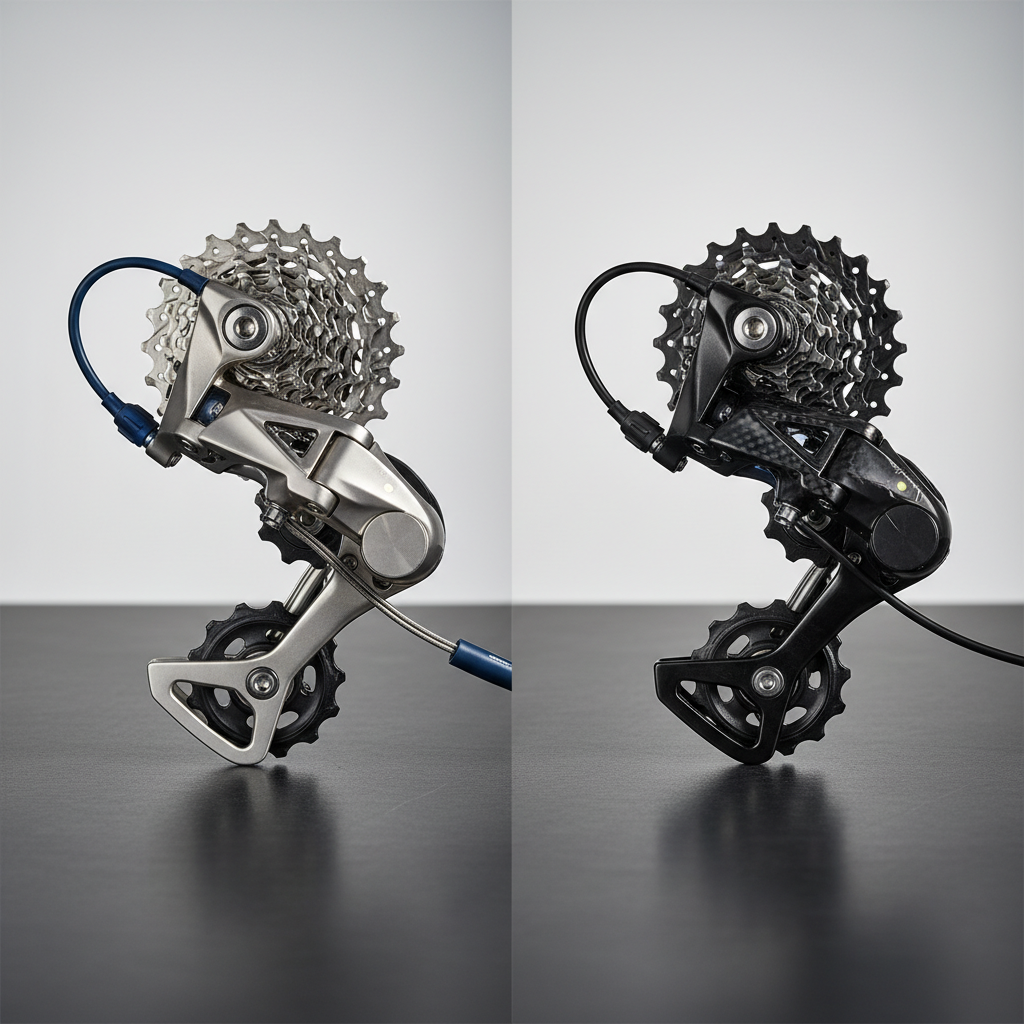
Choosing Your Gears: Mechanical vs. Electronic Shifting
Deciding between cables and batteries comes down to your budget and how much you hate maintenance. While electronic shifting is a luxury that offers perfect precision, mechanical shifting remains a reliable, cost-effective workhorse.
If you want the most consistent, "set it and forget it" experience, electronic shifting is the clear winner. It eliminates the frustration of gear skipping and makes shifting effortless, especially when you’re exhausted. However, if you are looking to save money for other upgrades—like a power meter or better wheels—high-end mechanical shifting still performs beautifully.
The Case for Electronic (Shimano Di2, SRAM eTap)
Think of electronic shifting like the move from a manual typewriter to a laptop. You press a button, and a small motor moves the chain perfectly every single time.
- Zero Cable Stretch: Mechanical cables stretch over time, which ruins your indexing. Electronic systems use wires or wireless signals, so your shifting stays perfect for years.
- Shifting Under Load: If you’re halfway up a steep hill and realize you’re in the wrong gear, electronic derailleurs are much better at moving the chain while you're putting out high power.
- Multiple Shift Points: You can add "satellite" buttons. This means you can shift while your hands are on the tops of the bars during a long climb, not just when you're in the hoods.
The Case for Mechanical (Shimano 105, Tiagra)
Mechanical shifting uses steel cables to pull the derailleurs. It’s what we’ve used for decades, and it works because it’s simple.
- Price Tag: You can usually save $600 to $1,000 by choosing a mechanical group set. That’s a lot of money you could spend on a coach or a cycling trip.
- No Charging Required: You never have to worry about your battery dying 20 miles from home. With mechanical, as long as the cable isn't snapped, you’re moving.
- Field Repairable: If something goes wrong in the middle of nowhere, any bike shop (and most riders) can fix a cable. If an electronic circuit board fries, your ride is over.
Real-World Examples
If you’re doing a 20-minute FTP test, the last thing you want is a skipped gear when you’re gasping for air. Electronic shifting makes that gear change instant and brainless.
On the flip side, if you are bikepacking across a remote area, mechanical is the safer bet. If your battery dies or a wire snaps in the wilderness, you're stuck in one gear.
Why this matters for YOUR training
Your gear should never be an excuse to miss a workout. If your mechanical gears are constantly clicking and skipping, it ruins your focus during intervals.
If you have the budget, electronic shifting removes a layer of "mechanical friction" from your training. You’ll find yourself shifting more often to keep your cadence perfect, which helps you manage fatigue better during long rides.
Summary
- Go Electronic if: You want the best performance, hate tinkering with cables, and have the extra budget.
- Go Mechanical if: You want a bike that’s easy to service yourself and you’d rather spend your money on other performance upgrades.
- The Bottom Line: A bike with electronic shifting won't make you faster, but it will make your ride much more enjoyable.