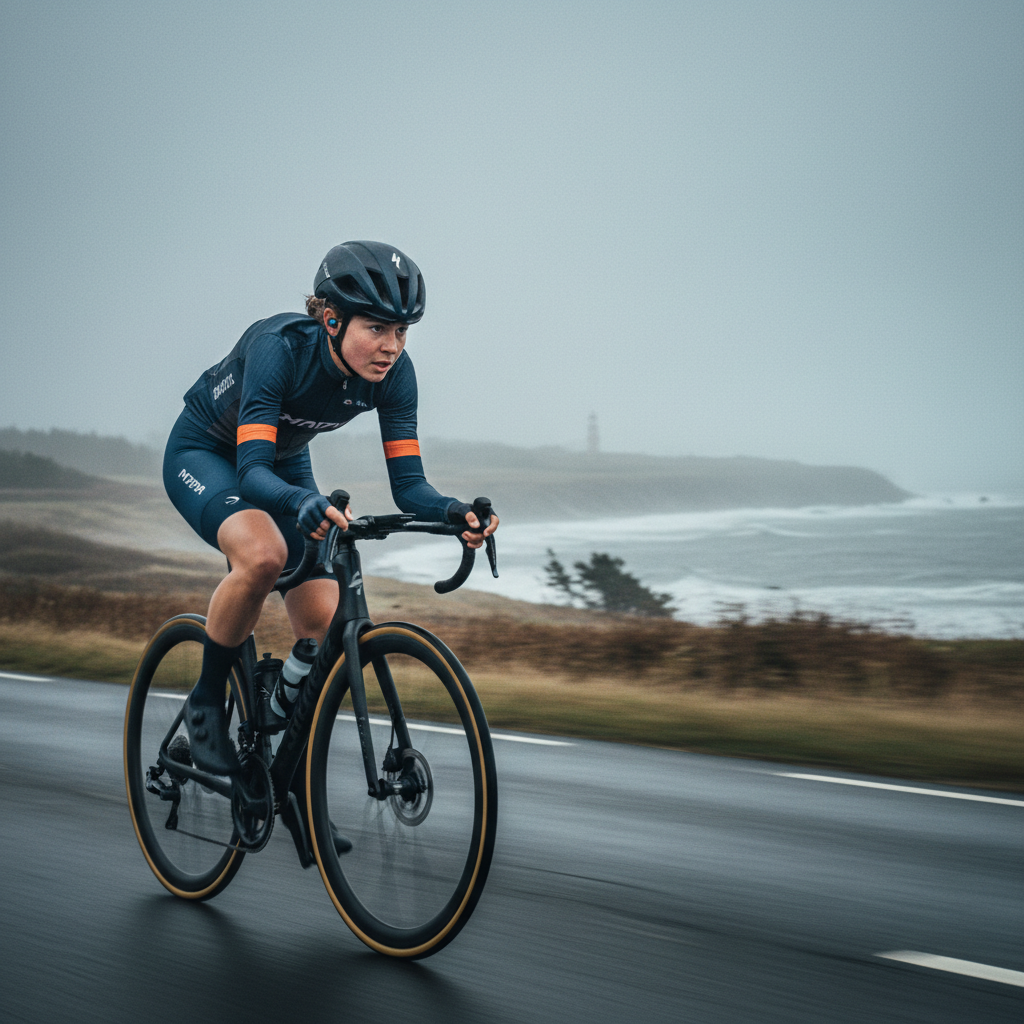
The Advanced Training Playbook: Mastering Heat and Altitude for Peak Performance
Advanced training protocols like heat acclimation and altitude simulation are the "secret weapons" that take you from fit to elite. Think of them as force multipliers; they don't replace your hard work on the bike, but they make every watt you produce more efficient. By strategically stressing your body with temperature or oxygen deprivation, you trigger physiological changes—like increased blood volume and more red blood cells—that make your standard FTP feel easier to maintain.
If you’ve hit a plateau or you're looking for that final 2-3% gain for a goal event, you’re in the right place. We’re going to dive deep into how you can use these "marginal gains" without needing a pro team budget or a laboratory.
Why Advanced Protocols Matter for Your Training
You’ve probably heard the phrase "marginal gains." In the world of cycling and endurance sports, once you’ve nailed your nutrition, your recovery, and your 2x20 minute threshold intervals, the gains start to get smaller.
To keep progressing, you have to find new ways to "scare" your body into adapting. Advanced protocols like heat and altitude training are essentially controlled stressors.
When you train in the heat, your body struggles to cool itself down. To fix this, it produces more blood plasma (the liquid part of your blood). When you train at altitude (or simulate it), your body struggles to get oxygen to your muscles. To fix this, it produces more red blood cells.
Both of these adaptations lead to the same result: a more powerful engine.
The "Poor Man’s Altitude"
Heat training is often called the "poor man's altitude." Why? Because the increase in blood plasma helps your heart pump more blood with every beat.
This lowers your heart rate for the same power output. It also makes you much more resilient when the weather gets hot on race day. If your FTP is 250W, heat training helps ensure you can actually hold 250W when it’s 90 degrees outside, rather than seeing your power tank as your core temperature rises.
Part 1: Heat Acclimation – Your Secret Weapon
Heat acclimation is one of the most effective and accessible "hacks" in endurance sports. Unlike altitude training, which can take weeks to show results, you can see significant changes from heat training in as little as 5 to 10 days.
The Science: What’s Happening Inside?
When you ride in the heat, your body has a conflict. It needs to send blood to your muscles to provide power, but it also needs to send blood to your skin to sweat and cool you down.
By repeatedly exposing yourself to heat, your body adapts in three major ways:
- Plasma Volume Expansion: Your body increases the amount of fluid in your blood. This gives you a bigger "reservoir" to use for both cooling and powering your muscles.
- Earlier Sweating: You start sweating sooner and your sweat becomes more dilute (you lose less salt).
- Lower Core Temperature: Your "baseline" temperature drops, giving you more "headroom" before you overheat.
How to Do It: The Protocols
You don't need a tropical island to do this. You can do it in your spare bedroom or at the local gym.
1. The Post-Ride Sauna (The Gold Standard)
This is the most effective method for most amateur athletes.
- The Session: Immediately after a normal workout, sit in a hot sauna (at least 175°F / 80°C) for 20-30 minutes.
- The Rule: Do not drink water during the sauna. You want to trigger the dehydration signal that tells your brain to increase plasma volume.
- The Recovery: Drink plenty of water and electrolytes after you get out.
2. Indoor Training (The "No Fan" Method)
If you don't have a sauna, use your indoor trainer.
- The Session: Do a low-intensity zone 2 ride for 45-60 minutes.
- The Setup: Turn off the fans. Wear an extra layer of clothing (like a light jacket).
- The Goal: You want to feel uncomfortably warm, but not dizzy or nauseous. Your heart rate will be 10-15 beats higher than usual for that power.
3. Hot Baths
- The Session: Soak in a hot bath (104°F / 40°C) for 30 minutes after a ride.
- The Benefit: This is a great way to maintain heat adaptations if you can't get to a sauna.
Practical Example: The 10-Day Heat Block
If you have a big race coming up, try this 10 days out:
- Days 1-3: 20 mins sauna post-ride.
- Days 4-7: 30 mins sauna post-ride.
- Days 8-10: 15 mins sauna (tapering off).
- Race Day: You’ll feel like you have a "super-cooling" system.
Part 2: Altitude Training – Raising the Ceiling
Altitude training is the holy grail of endurance performance. It’s why pro teams spend weeks in places like Tenerife or Mammoth Lakes. At high altitudes, there is less oxygen in the air. Your body responds by creating more hemoglobin (the protein in red blood cells that carries oxygen).
The "Live High, Train Low" (LHTL) Strategy
This is the gold standard protocol. You want to live at a high altitude (to trigger the red blood cell boost) but train at a lower altitude (so you can still hit your high power numbers).
If you train at high altitude, you can’t push as much power because there isn't enough oxygen. This can actually lead to "detraining" because your muscles aren't working as hard as they do at sea level. By living high and training low, you get the blood boost and the high-intensity workout.
Altitude Simulation for the Rest of Us
Most of us can't move to the mountains for a month. That’s where simulation comes in.
1. Hypoxic Tents (Altitude Tents)
You sleep in a tent that covers your bed. A generator filters out some of the oxygen, mimicking an altitude of 8,000 to 10,000 feet.
- The Commitment: You need to spend at least 8-10 hours a day in the tent for at least 3-4 weeks to see a change.
- The Cost: These are expensive (often $2,000+), but they are the most effective way to simulate "Living High."
2. Intermittent Hypoxic Exposure (IHE)
This involves breathing high-altitude air through a mask while sitting on your couch for short bursts (e.g., 5 minutes on, 5 minutes off).
- The Reality: While some studies show benefits for lung function, it’s generally less effective than a tent for increasing red blood cell count.
3. What About "Elevation Masks"?
You’ve seen people at the gym wearing masks that look like Bane from Batman.
- Coach’s Note: These do not simulate altitude. They just make it harder to breathe. They strengthen your diaphragm (breathing muscles), but they don't change your blood chemistry. Save your money.
Part 3: Integrating Advanced Protocols into Your Training
You shouldn't be doing these things all year round. They are "peaks" to be used before a specific goal.
The Timing: When to Pull the Trigger
- Heat Acclimation: Start 2 weeks before your goal event. The adaptations disappear quickly (within 1-2 weeks), so timing is everything.
- Altitude Simulation: Start 4-6 weeks before your event. It takes 3 weeks to build the cells, and you want a week or two back at sea level to "sharpen" your legs before the race.
The Traffic Light System & Advanced Stress
Remember our Traffic Light System? Heat and altitude add massive "Fatigue" (ATL) to your system without necessarily showing up as "Fitness" (CTL) on your power meter.
- If you are in the Red (TSB < -40): Do NOT start a heat or altitude block. You are already too tired, and the extra stress will likely lead to overtraining or illness.
- If you are in the Green (TSB -15 to -25): This is the perfect time to layer in these stressors.
Why This Matters for YOUR Training
If you are a recreational rider doing 5 hours a week, these protocols are overkill. You will get more benefit from simply riding 6 hours a week.
However, if you are training 10+ hours a week, your body has likely adapted to your routine. Adding a heat block is a way to "shock" the system into a new level of fitness without having to find more hours in your busy schedule.
Part 4: Common Mistakes Athletes Make
Even the pros mess this up. Here is what you need to avoid:
1. Overcooking the Intensity
When you are heat training or at altitude, your heart rate will be higher for the same power.
- The Fix: Ignore your power numbers for a bit. Train by Heart Rate or RPE (Rate of Perceived Exertion). If 200W usually feels like a 5/10, but in the heat it feels like an 8/10, back off. The stress comes from the heat, not the watts.
2. Neglecting Iron Intake
Your body cannot make new red blood cells (at altitude) without iron.
- The Fix: Get a blood test before starting an altitude block. If your ferritin (stored iron) is low, altitude training will just make you tired and won't give you any extra red blood cells.
3. Forgetting the Recovery
Heat and altitude training are "invisible" stressors. You won't feel the muscle soreness of a sprint session, but your nervous system will be fried.
- The Fix: Treat a sauna session like a hard interval workout. Get extra sleep and don't skimp on the carbs.
4. Dehydration
This is the biggest risk with heat training.
- The Fix: Weigh yourself before and after your "hot" sessions. For every pound you lose, drink 16-20 oz of water with electrolytes. If you lose more than 2-3% of your body weight, you’ve gone too far.
Part 5: Equipment and Tools
You don't need a lot, but a few tools can make these protocols safer and more effective.
- CORE Body Temp Sensor: This is a small device that clips to your heart rate strap. It measures your internal core temperature in real-time. It’s the best way to ensure you are in the "Heat Adaptation Zone" (usually between 38.5°C and 39.0°C) without overdoing it.
- Pulse Oximeter: If you are using an altitude tent, this $20 device tells you your blood oxygen saturation (SpO2). You want to see it drop into the high 80s or low 90s to know the "altitude" is working.
- High-Quality Electrolytes: Look for mixes with at least 500-1000mg of sodium per liter. When you are expanding your plasma volume, you need the salt to "hold" the water in your blood vessels.
Summary: How to Level Up
Advanced protocols are about being smart with the stress you put on your body. Here’s the "Too Long; Didn't Read" version:
- Heat Training increases your blood plasma. Use it for 10-14 days before a big race or to break through a fitness plateau.
- Altitude Training increases your red blood cells. Use it for 3-4 weeks if you have a high-level goal and access to a tent or the mountains.
- Listen to your body. These protocols are intense. If your TSB (Form) is deep in the red, back off.
- Focus on the basics first. Don't worry about saunas if you aren't already hitting your weekly interval sessions and getting 8 hours of sleep.
Try this next: If you have a race in two weeks, try three 20-minute sauna sessions this week after your easy rides. Notice how your heart rate responds to your workouts next week. You’ll likely find that your "usual" pace feels just a little bit easier. That’s the power of advanced training.
Now, go get those gains!