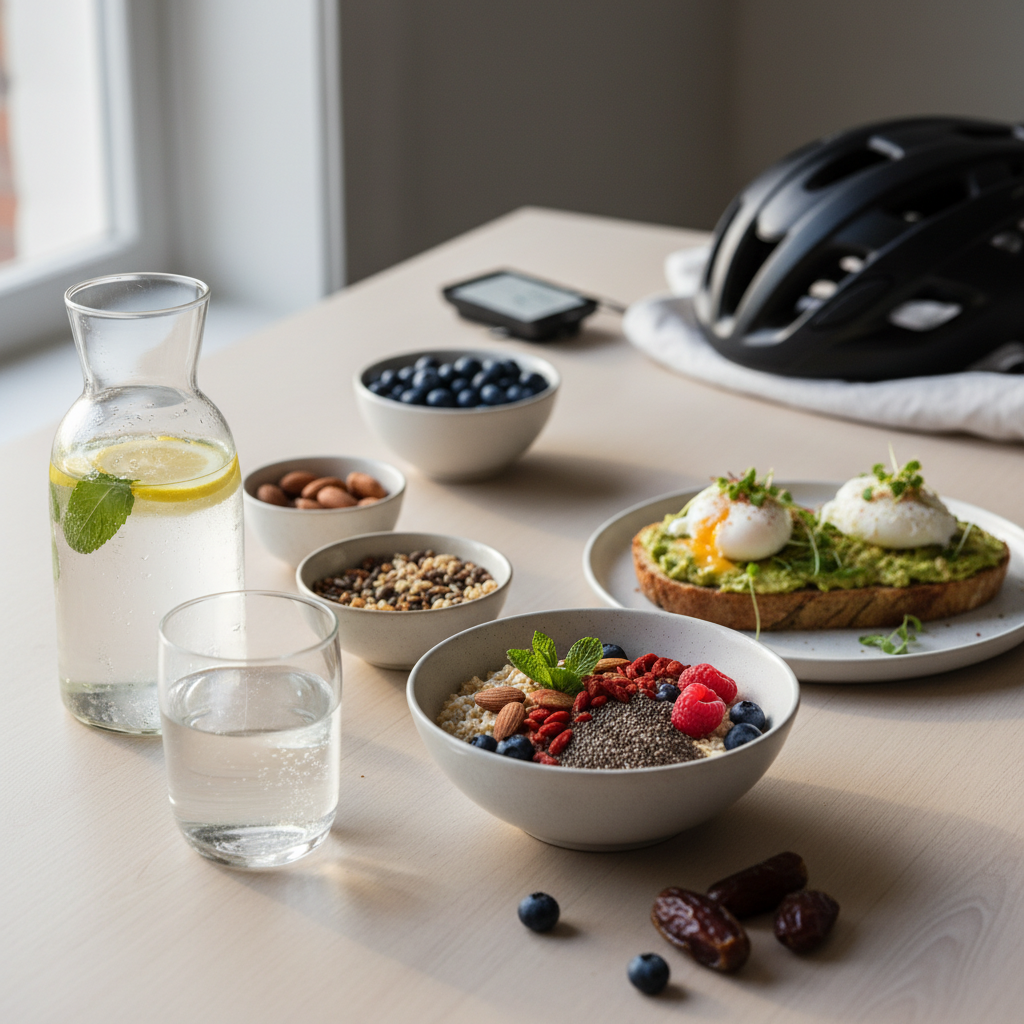
How to Boost Your HRV for Better Cycling
To increase your HRV (Heart Rate Variability), you need to give your nervous system a chance to move from "fight or flight" mode into "rest and digest" mode. You do this by prioritizing high-quality sleep, staying hydrated, and ensuring your training plan includes enough recovery days to balance out your hard efforts.
Think of HRV as a gauge of how much stress your body is currently handling. When your HRV is high, your heart rate is "bouncy" and responsive, meaning you’re ready to smash a workout. When it’s low, your system is tired and rigid, and you’re likely overreaching.
Here is how you can start moving those numbers in the right direction today:
1. Sleep is your biggest lever
Nothing moves the needle like a solid 7 to 9 hours of sleep. If you’re only getting 6 hours, your nervous system stays on high alert, which drags your HRV down.
Try this: Keep your bedroom cool (around 65°F or 18°C) and stop looking at your phone 30 minutes before bed. The blue light from your screen tricks your brain into thinking it’s daytime, which kills your sleep quality.
2. Watch the "hidden" stressors
Your body doesn't know the difference between a stressful meeting at work and a set of 2x20 minute threshold intervals. Both drain your battery.
- Alcohol: Even one or two drinks in the evening can tank your HRV by 10-20% the next morning. If you want high numbers, keep the beer for your rest days or skip it entirely during heavy training blocks.
- Late Meals: If you eat a massive bowl of pasta at 9:00 PM and go to bed at 10:00 PM, your body spends the night digesting instead of recovering. Try to finish your last meal 2-3 hours before sleep.
3. Use the Traffic Light System
Don't just chase a high number for the sake of it; use it to guide your training. If your normal HRV baseline is 60ms and you wake up and see a 45ms, that’s a red light.
- If you're in the Green: Go ahead and do those VO2max intervals.
- If you're in the Red: Swap that hard ride for a 30-minute easy spin or a total rest day. Pushing through a "red" day usually results in a low-quality workout and a longer recovery time later.
4. Practice "Box Breathing"
You can actually "force" your HRV to rise in the short term by calming your breath. This helps transition your body out of a stressed state.
Try this: Inhale for 4 seconds, hold for 4, exhale for 4, and hold for 4. Do this for just five minutes before bed or after a stressful work call. It tells your brain that you are safe and it’s okay to recover.
Why this matters for YOUR training
If you ignore a falling HRV and keep piling on the TSS (Training Stress Score), you’ll eventually hit a wall. You won't get faster; you'll just get tired. By focusing on these recovery habits, you ensure that every drop of sweat you put into your intervals actually turns into a higher FTP.
Summary
- Prioritize Sleep: Aim for 7-9 hours in a cool, dark room.
- Limit Alcohol: It’s the fastest way to tank your recovery.
- Eat Earlier: Give your digestion a head start before bed.
- Listen to the Data: If your HRV drops significantly, take an easy day.